
The Fix Most People Try First (and Why It's a Problem)
When a garage door stops a few inches from the ground and reverses back up, the instinct is to open the opener's control panel and crank up the force or close-limit setting. It's tempting because it's a quick screwdriver adjustment, it's hidden right there on the motor unit, and it often seems to "fix" the problem on the first try. The door closes. Problem solved, right?
Not quite. That reversal is a safety feature. The opener is programmed to stop and reverse when it senses resistance, because that resistance could be a pet, a foot, or a bike in the door's path. Cranking up the force doesn't fix whatever is causing the resistance; it just tells the opener to push through it harder. You end up with a door that slams down with more force than it should, on top of whatever mechanical problem started the reversing in the first place. Figure out why it's reversing before touching that dial.
What You're Actually Seeing
There are two distinct symptoms, and they point technicians in slightly different directions:
- The door starts closing and reverses partway down, every time, at roughly the same spot.
- The door won't close at all — you press the button and nothing happens, or the opener hums but the door doesn't move, or the lights on the opener blink a set number of times.
Both usually trace back to the same short list of causes. Here's the order a technician works through them, starting with the fastest checks and moving toward the ones that need tools and parts.
1. The Safety Sensors (Photo Eyes)
These are the two small sensors mounted a few inches off the ground on either side of the track, pointed at each other. If anything blocks that beam, breaks the alignment, or coats the lenses, the opener won't close the door — or it'll start closing and reverse the instant it loses the signal.
In this area, humidity and afternoon storms are common culprits. Moisture fogs the lenses, spiders build webs across them overnight, and a bumped ladder or stored item can nudge one sensor out of alignment over time. The fix: wipe both lenses clean, confirm both indicator lights are solid (not blinking), and make sure nothing — including a leaf pile from a storm — sits in the beam path. If the lights won't both go solid, the bracket likely needs to be re-aimed.
2. Obstructions and Track Condition
Next, a technician checks the tracks themselves for debris, dents, or rust. Salt air and swings between humid and dry conditions can corrode track hardware over time, and a bent track from an accidental bump will cause the rollers to bind right at the spot where you're seeing the reversal. The fix ranges from clearing debris and lubricating the track, to straightening minor bends, to full off-track door repair if the door has come off the rail entirely.
3. Opener Limit and Force Settings
If the sensors and tracks check out, the opener's limit switches come next. These tell the motor exactly how far to travel before it should consider the door "closed." If the limit is set wrong, the opener thinks it's hit the floor too early and reverses, or thinks it should keep pushing when it's actually jammed. The fix is a recalibration — not a blind increase in force, but a correct reset so the door travels its real, full distance.
4. Springs
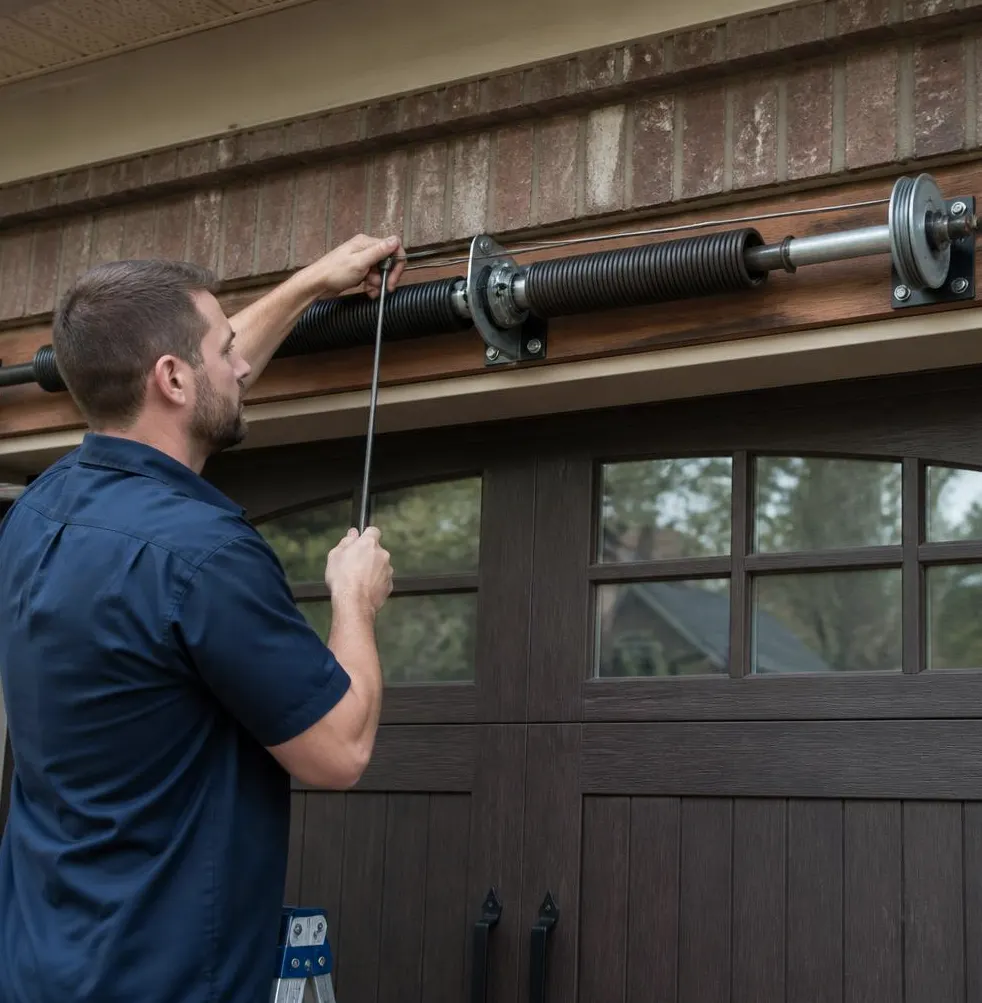
A door that's heavy to lift by hand, or one where the opener strains and reverses under load, often has a weakening torsion or extension spring. Springs lose tension gradually, and Florida's heat-humidity cycle doesn't help metal fatigue. If a spring has fully failed, the door usually won't budge at all — the opener will hum, strain, or trip its own safety shutoff. The fix is spring replacement, which should always be done by a trained technician; these are under heavy tension and not a DIY job.
5. Cables
Frayed or slipped cables cause the door to hang unevenly, one side lower than the other. An opener senses that imbalance as resistance and reverses to protect the door and track. The fix is cable repair or replacement, paired with a check of the drums and pulleys the cables run on.
6. Rollers, Hinges, and the Opener Itself
Last on the list: rusted or swollen rollers binding in the track (common after a stretch of heavy humidity or standing moisture), worn hinges, or — rarer — a failing logic board or worn gear inside the opener itself. These get ruled in only after everything upstream checks out clean.
When to Call Chiefland Garage Door
If you've cleaned the sensors, cleared the tracks, and the door still reverses or won't close, it's time to call. We check sensors, tracks, cables, and spring tension on-site and can usually tell you within minutes which of these is the actual cause. Our Garage Door Spring Repair and Garage Door Cable Repair services cover the two issues that are not safe to troubleshoot yourself, and we carry the parts to handle most repairs same-visit.
If your garage door in Chiefland, Trenton, Williston, or anywhere in Levy County is giving you trouble closing, call Chiefland Garage Door — we'll get it diagnosed and working right the first time.