
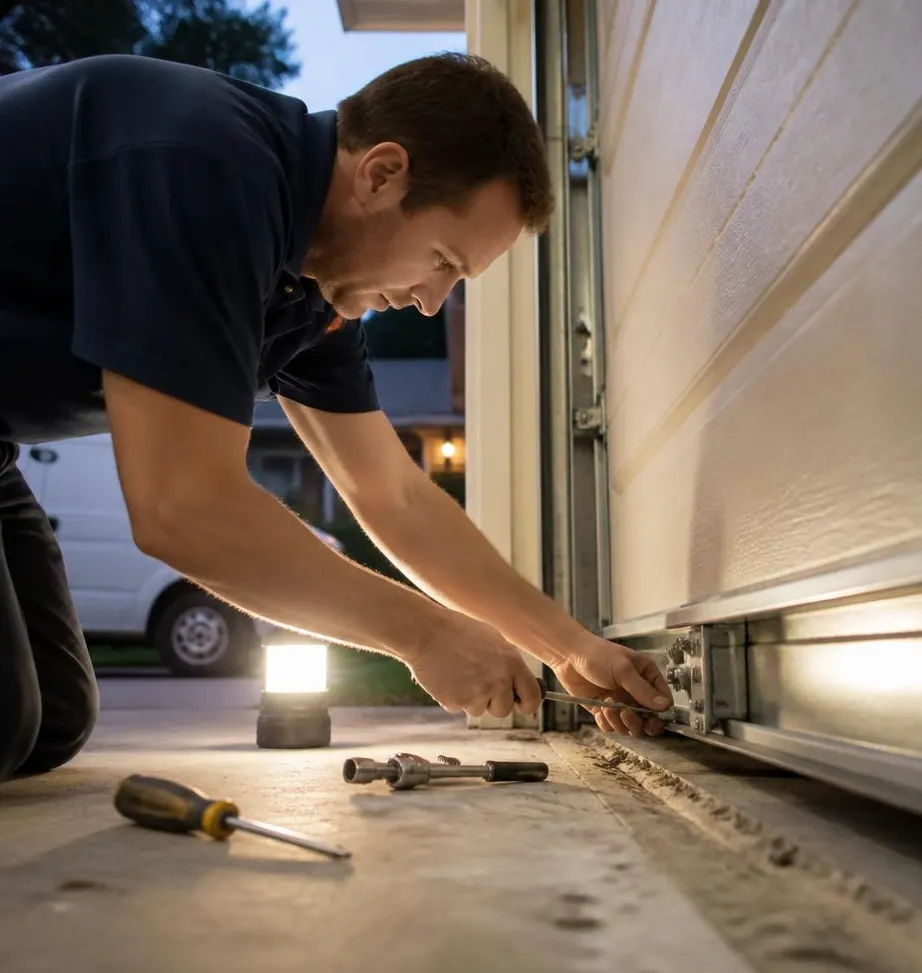
A Common Call: "The Door Won't Budge After I Pulled the Cord"
A technician pulls into a driveway and the homeowner is standing next to a garage door that's stuck halfway up, the opener running but the door not moving with it. Nine times out of ten, someone pulled the red emergency release cord during a power blip or a stuck-door moment, and the door either dropped unexpectedly or came loose from the opener's trolley and won't reconnect. In Levy County, where afternoon storms knock out power and humidity swells wood-framed doors in their tracks, this is one of the most common service calls we get — and most of it is preventable once you understand what that cord actually does.
What the Emergency Release Cord Is Actually For
The cord hangs from a mechanism called the trolley, which is what physically connects your garage door opener to the door itself. Pulling it disengages the door from the opener's carriage, letting you lift or lower the door by hand. It exists for two real situations: a power outage when you need to get a vehicle in or out, or an opener that has failed and is stuck mid-cycle. That's it. It is not meant to be a regular way to open your door, and it is not a troubleshooting first step for noise or slow movement.
What Goes Wrong — and How Badly
The danger isn't the cord itself; it's what's holding the door up when you pull it.
- Broken or weakened springs: If a spring is cracked, stretched, or already failing — common after years of humidity and temperature swings — the opener may be the only thing keeping the door from slamming down. Pull the cord with the door open and a bad spring, and the door can drop fast and hard, which has injured people and damaged vehicles parked underneath.
- Misjudging door weight: Without the opener's assistance, a standard double door can weigh over 100 pounds. Releasing it while it's partway up, then losing your grip, is how doors come off track or crash onto fingers and toes.
- Trolley damage: Repeatedly pulling the cord without properly reconnecting the carriage afterward can bend or strip the connecting mechanism, which means the opener runs but the door doesn't move — exactly the stuck-halfway scenario above.
- Rust and corrosion on the release mechanism: Closer to the Gulf, salt air speeds up corrosion on the metal arm and pivot points. A corroded release can stick, jam, or release unevenly, which throws the door off its tracks even during a routine use.
The Actions That Actually Prevent Problems
- Only pull the cord when the door is fully closed. This removes almost all of the risk. If you must release it while open, support the door with a pole or clamp on both sides first.
- Know your spring condition before you need the cord. If you've noticed slow movement, a loud bang in recent months, or visible gaps in the spring coil, treat the release cord as off-limits until it's repaired.
- Reconnect it correctly. After manual use, guide the trolley back until it clicks into the carriage, then test with the opener before loading anything through the doorway.
- Check the release arm for rust periodically, especially if your garage is closer to the coast or gets regular salt-laden air. A light coat of appropriate lubricant keeps it moving freely.
- During storm-related outages, use the cord once, briefly — get the vehicle out, then leave the door manually down and secured rather than cycling it open and closed repeatedly by hand.
When to Call Chiefland Garage Door
If your door dropped unexpectedly after using the release cord, won't reconnect to the opener, or you're not sure whether your springs are safe to operate on manually, stop trying to force it. Our team handles garage door spring repair and off track door repair regularly for exactly these situations, and we'll check the trolley, cables, and release arm together so the fix actually holds instead of recurring on the next outage.
If you're dealing with a stuck door, a damaged release mechanism, or you just want the whole system checked before the next storm cuts the power, call Chiefland Garage Door — local technicians serving Chiefland, Trenton, Williston, Bronson, Fanning Springs, Cross City, Newberry, and Old Town, FL.